Athletes from Canada, Sweden, Britain and Germany have found themselves at the center of a curling controversy at the Winter Olympics, with accusations made of illegal “double-touching” when releasing the stone.The curling competitions at the Winter Olympics in Milan-Cortina, Italy, were mired in controversy this weekend after some athletes accused each other of cheating by illegally “double-touching” the stones as they were released down the ice.
The most recent case came in a game between Britain and Germany on Sunday, with Scottish curler Bobby Lammie being accused of double-touching with his team eventually winning 9-4
Winter Olympics hit by ‘double-touching’ curling controversy
Athletes from Canada, Sweden, Britain and Germany have found themselves at the center of a curling controversy at the Winter Olympics, with accusations made of illegal “double-touching” when releasing the stone.
Winter Olympics hit by ‘double-touching’ curling controversy
Athletes from Canada, Sweden, Britain and Germany have found themselves at the center of a curling controversy at the Winter Olympics, with accusations made of illegal “double-touching” when releasing the stone.
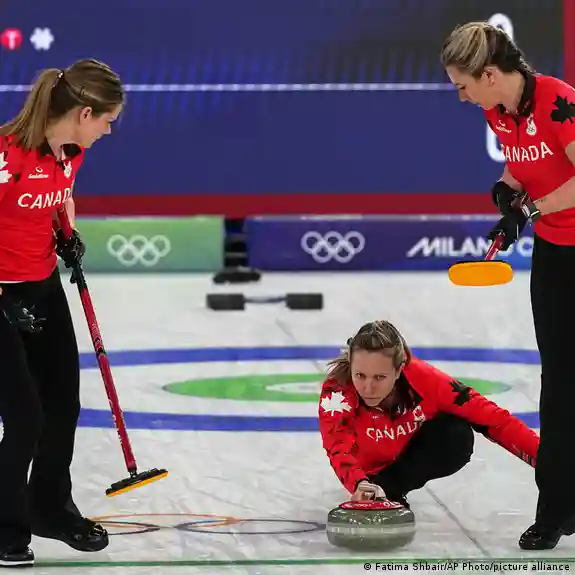
Canada’s Sarah Wilkes, Rachel Homan and Emma Miskew in action
Team Canada felt Rachel Homan (center) was “targeted” by extra officials in the “double-touching” curling controversyImage: Fatima Shbair/AP
The curling competitions at the Winter Olympics in Milan-Cortina, Italy, were mired in controversy this weekend after some athletes accused each other of cheating by illegally “double-touching” the stones as they were released down the ice.
The most recent case came in a game between Britain and Germany on Sunday, with Scottish curler Bobby Lammie being accused of double-touching with his team eventually winning 9-4.
How did the Winter Olympics’ curling controversy start?
The issues began on Friday night when Sweden’s men’s team accused their Canadian opponents of the infraction, triggering a heated clash between players and a subsequent media frenzy.
On Saturday, World Curling deployed additional officials to monitor the so-called “hog line” — the point at which curlers must let go of the stones during delivery — resulting in Rachel Homan of Canada’s women’s team having a stone disqualified against Switzerland after she allegedly touched it twice.
Curlers insist the double-touching infraction has never been called out with this level of intensity in past competitions, saying it can be difficult to tell if someone is guilty of it.
Canada slam ‘despicable’ decision, ‘untrained’ officials
Canadian men’s captain Brad Jacobs said he believed he and his compatriots were being unfairly targeted following the initial Swedish complaints.
“What happened with [Homan’s] rock was despicable,” he said. “I felt immediately as Canadian curlers we were targeted. To go out and pull her rock like that, I think it was a tragedy.”
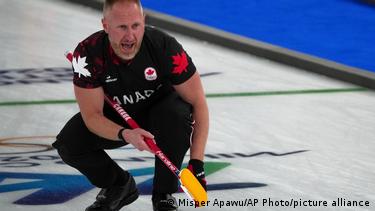
Canada’s Brad Jacobs in action on the iceCanada’s Brad Jacobs in action on the ice
Canada’s Brad Jacobs was furious at the penalties for “double-touching”Image: Misper Apawu/AP Photo/picture alliance
Canadian coach Paul Webster questioned World Curling’s decision to set officials at the hog line who he said were not adequately prepared for the role.
“I think we have untrained people doing things that they’ve never done before,” he said. “I have a lot of respect for people that are here volunteering their time but we’re not at some bonspiel in Saskatchewan just trying things out,” he said in reference to regular curling tournaments, “we’re at the Olympics.”
British stone removed vs. Germany
World Curling reversed its decision to ramp up officiating on Sunday but not before even more controversy, as British curler Bobby Lammie also had a rock removed from play against Germany.
Britain’s Bobby Lammie launching a stone against GermanyBritain’s Bobby Lammie launching a stone against Germany
Britain’s Bobby Lammie also had a stone removed for alleged “double-touching”Image: Misper Apawu/AP Photo/picture alliance
Asked about this incident, Canada’s Jacobs said: “If he threw that rock that way against us, personally I would never ever want that rock to be removed. He did nothing wrong in my opinion.”
But he at least felt it wasn’t just the Canadians being targeted — “which is good,” he said.
Canada’s Sarah Wilkes, Rachel Homan and Emma Miskew in action
Team Canada felt Rachel Homan (center) was “targeted” by extra officials in the “double-touching” curling controversyImage: Fatima Shbair/AP Photo/picture alliance
Advertisement
The curling competitions at the Winter Olympics in Milan-Cortina, Italy, were mired in controversy this weekend after some athletes accused each other of cheating by illegally “double-touching” the stones as they were released down the ice.
The most recent case came in a game between Britain and Germany on Sunday, with Scottish curler Bobby Lammie being accused of double-touching with his team eventually winning 9-4.
How did the Winter Olympics’ curling controversy start?
The issues began on Friday night when Sweden’s men’s team accused their Canadian opponents of the infraction, triggering a heated clash between players and a subsequent media frenzy.
On Saturday, World Curling deployed additional officials to monitor the so-called “hog line” — the point at which curlers must let go of the stones during delivery — resulting in Rachel Homan of Canada’s women’s team having a stone disqualified against Switzerland after she allegedly touched it twice.
Curlers insist the double-touching infraction has never been called out with this level of intensity in past competitions, saying it can be difficult to tell if someone is guilty of it.
Canada slam ‘despicable’ decision, ‘untrained’ officials
Canadian men’s captain Brad Jacobs said he believed he and his compatriots were being unfairly targeted following the initial Swedish complaints.
“What happened with [Homan’s] rock was despicable,” he said. “I felt immediately as Canadian curlers we were targeted. To go out and pull her rock like that, I think it was a tragedy.”
Translate This Article