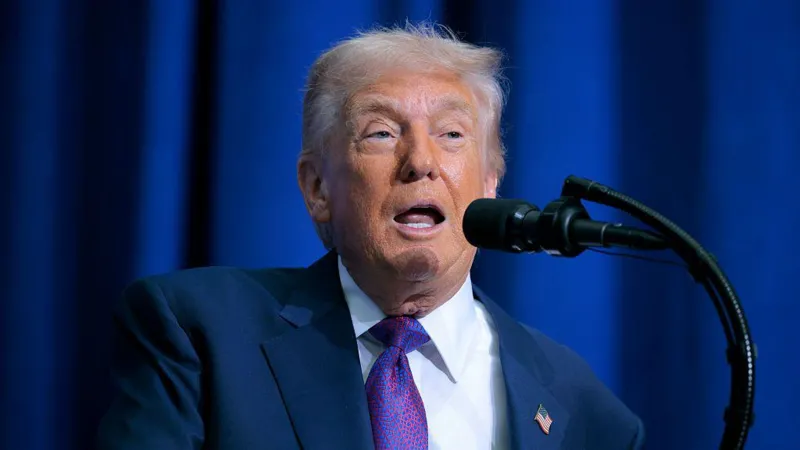
Donald Trump says the world will find out “over the next, probably, 10 days” whether the US will reach a deal with Iran or take military action.
At the inaugural meeting of his Board of Peace in Washington DC, Trump said “we have some work to do” in coming to an agreement with the Islamic Republic about its nuclear programme, and that “we may have to take it a step further”.
In recent days, the US has surged military forces to the Middle East, while progress was also reported at talks between American and Iranian negotiators in Switzerland.
Democratic lawmakers, and some Republicans, have voiced opposition to any potential military action in Iran without congressional approval.n his remarks, Trump noted that Special Envoys Steve Witkoff and Jared Kushner, who is also Trump’s son-in-law, had “some very good meetings” with Iran.
“It’s proven to be, over the years, not easy to make a meaningful deal with Iran,” he said. “Otherwise bad things happen.”
One day earlier, White House press secretary Karoline Leavitt warned that Iran would be “very wise” to make a deal with the US, adding that Trump was still hoping for a diplomatic solution over Tehran’s nuclear programme.
When Trump first announced the Board of Peace, it was thought to be aimed at helping end the two-year war between Israel and Hamas in Gaza and oversee reconstruction.
But in the last month its mission has appeared to go beyond one conflict, with many wondering if the Trump-chaired board, made up of about two dozen countries, is meant to sideline the United Nations.
US missile and aircraft struck three Iranian nuclear facilities in June last year, and the White House was reportedly discussing new attack options this week.
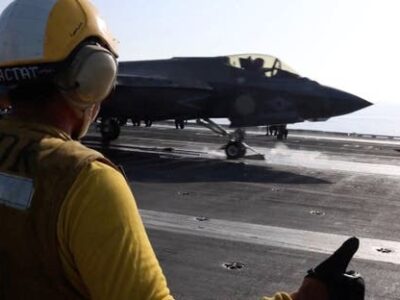
American forces have been ramping up their presence in the region in recent weeks, including the deployment of the USS Abraham Lincoln aircraft carrier.
However, the BBC understands that the British government has not given permission for the US to use UK military bases to support any potential strikes on Iran.
In previous military operations in the Middle East, the US used RAF Fairford, in Gloucestershire, and the UK overseas territory of Diego Garcia, in the Indian Ocean.
Satellite images have also shown that Iran has reinforced military facilities, and the country’s Supreme Leader, Ayatollah Ali Khamanei, has posted messages to social media threatening US forces.
“The US President constantly says that the US has sent a warship toward Iran. Of course, a warship is a dangerous piece of military hardware,” one of Khamenei’s posts read.
“However, more dangerous than that warship is the weapon that can send that warship to the bottom of the sea.”
Several members of US Congress have expressed opposition to any military action against Iran.
California Democrat Ro Khanna and Kentucky Republican Thomas Massie have said they will try to force a vote on the matter next week, citing the 1973 War Powers Act.
The act grants Congress the ability to check the president’s power to commit the US to armed conflict.
“A war with Iran would be catastrophic,” Khanna posted on social media. “Iran is a complex society of 90 million people with significant air defences and military capabilities.”
He also said thousands of US troops in the region “could be at risk of retaliation”.
The chances of passage in both chambers of Congress are not strong.
In January, Senate Republicans blocked a similar war powers resolution that would have required the Trump administration to obtain congressional approval before launching further military operations in Venezuela following the capture of Nicolas Maduro
Translate This Article