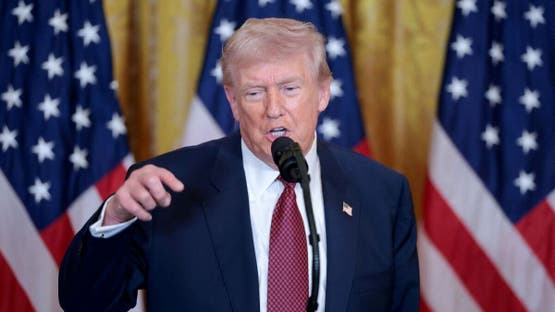
President Donald Trump told the first meeting of his Board of Peace on Thursday that nations had contributed $7 billion to a Gaza reconstruction fund that aims to rebuild the enclave once Hamas disarms, an objective that is far from becoming a reality.The disarmament of Hamas militants and accompanying withdrawal of Israeli troops, the size of the reconstruction fund and the flow of humanitarian aid to the war-battered populace of Gaza are among the major questions likely to test the effectiveness of the board in the months ahead.The meeting in Washington came amid a broader push by Trump to build a reputation as a peacemaker in hopes of winning the Nobel Peace Prize. It also took place as the United States threatens war against Iran and has embarked on a massive military buildup in the region in case Tehran refuses to give up its nuclear program.The Board’s founding membership does not include some key U.S. Western allies concerned about the scope of the initiative.Trump also announced the U.S. was pledging
$10 billion for the board, but didn’t specify what the money will be used for.
Maj. Gen. Jasper Jeffers, the leader of the newly created International Stabilization Force, said the plans call for 12,000 police and 20,000 soldiers for Gaza.
“With these first steps, we help bring the security that Gaza needs for a future of prosperity and enduring peace,” Jeffers said.
The board was initiated as part of Trump’s 20-point peace plan to end the conflict in Gaza. But since the October ceasefire, Trump’s vision for the board has morphed and he wants it to have an even more ambitious remit — one that will not only complete the Herculean task of bringing lasting peace between Israel and Hamas but will also help resolve conflicts around the globe.
But the Gaza ceasefire deal remains fragile and Trump’s expanded vision for the board has triggered fears the U.S. president is looking to create a rival to the United Nations.
Trump, pushing back against the criticism, said the creation of his board would help make the U.N. viable in the future.
“Someday I won’t be here. The United Nations will be,” Trump said. “I think it is going to be much stronger, and the Board of Peace is going to almost be looking over the United Nations and making sure it runs properly.”
Even as Trump spoke of the gathering as a triumph that would help bring a more persistent peace to the Middle East, he sent new warnings to Iran.
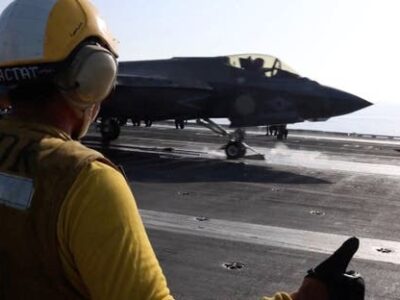
Tensions are high between the United States and Iran as Trump has ordered one of the largest U.S. military buildups in the region in decades.
One aircraft carrier group is already in the region and another is on the way. Trump has warned Tehran it will face American military action if it does not denuclearize, give up ballistic missiles and halt funding to extremist proxy groups, such as Hezbollah and Hamas.
“We have to make a meaningful deal. Otherwise bad things happen,” Trump said.
Some US allies remain skeptical
More than 40 countries and the European Union confirmed they were sending officials to Thursday’s meeting. Germany, Italy, Norway, Switzerland and the United Kingdom are among more than a dozen countries that have not joined the board but that took part as observers.
Most countries sent high-level officials, but a few leaders — including Indonesian President Prabowo Subianto, Argentine President Javier Milei and Hungarian President Viktor Orbán — traveled to Washington for the gathering.
“Almost everybody’s accepted, and the ones that haven’t, will be,” Trump offered. “And some are playing a little cute — it doesn’t work. You can’t play cute with me.”
The U.N. Security Council held a high-level meeting Wednesday on the ceasefire deal and Israel’s efforts to expand control in the West Bank. The U.N. session in New York was originally scheduled for Thursday but was moved up after Trump announced the board’s meeting for the same date and it became clear that it would complicate travel plans for diplomats planning to attend both.
Vatican Secretary of State Cardinal Pietro Parolin told reporters earlier this week that “at the international level it should above all be the U.N. that manages these crisis situations.”
Questions about disarming Hamas
Central to Thursday’s discussions was assembling an armed international stabilization force to keep security and ensure the disarming of the militant Hamas group, a key demand of Israel and a cornerstone of the ceasefire deal.
Hamas has provided little confidence that it is willing to move forward on disarmament. The administration is “under no illusions on the challenges regarding demilitarization” but has been encouraged by what mediators have reported back, according to a U.S. official who was not authorized to comment publicly and spoke on condition of anonymity.
Israeli Prime Minister Benjamin Netanyahu reiterated his pledge that Gaza will not be rebuilt until Hamas disarms.
“We agreed with our friends in the United States: There will be no reconstruction of the Gaza Strip before the demilitarization of the Gaza Strip,” he said in a speech to graduating officers at an army base in southern Israel. “Soon, Hamas will face a dilemma: disarm the easy way – or disarm the hard way. But it will be disarmed, and Gaza will no longer threaten Israel.”
Associated Press writers Josef Federman in Jerusalem, Didi Tang in Washington, Farnoush Amiri at the United Nations and Nicole Winfield in Rome contributed reporting.
Translate This Article