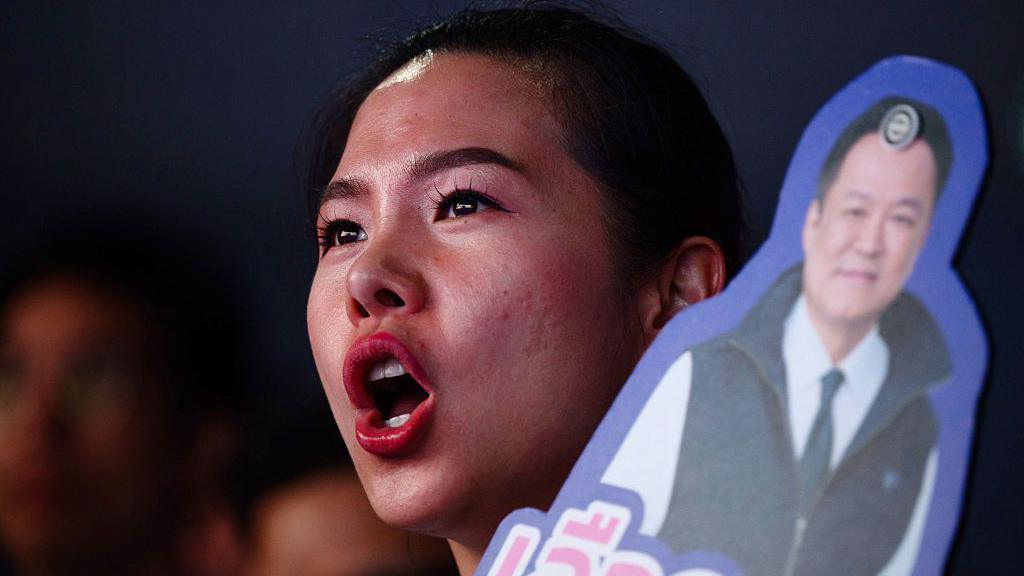
The snap poll was called by Prime Minister Anutin Charnvirakul, the country’s third leader in three years
Neither his Bhumjaithai Party nor the People’s Party, which is leading in the polls, are expected to win a majority, making a coalition government likely
But the big question hanging over this election is how well the young, reformist People’s Party performs, our South East Asia correspondent writes
If it exceeds the 151 seats it won in 2023, barring it from governing may prove difficult, despite the unease about its agenda in conservative and royalist circles
The economy, slowed down by a lack of reforms, high household debt and rising costs, is high on the agenda
Also on the ballot: a referendum on rewriting the military-backed constitution, which critics say gives too much power to the unelected senate.
The election today is happening against a backdrop of political turmoil.
Prime Minister Paetongtarn Shinawatra found her government in crisis last year, after a phone call between her and Cambodian strongman Hun Sen was leaked.
The call in June last year came after weeks of escalating bilateral tensions: after a Cambodian soldier was killed in border clashes, the two countries imposed travel restrictions on each other.
In the call, Paetongtarn could be heard calling Hun Sen “uncle” and appearing to disparage a Thai military commander.
Hun Sen, who said one of the Cambodian politicians leaked it, later shared the entire recording on Facebook.
Paetongtarn’s deferential tone in the call – which she defended as a negotiation tactic – sparked anger among the public and fellow lawmakers. She apologised, but it was not enough to stop the scrutiny.
In August – one year after she took office – Thailand’s Constitutional Court stripped Paetongtarn of the premiership.
Translate This Article