The Premier League’s global appeal is built on packed stadiums and electric atmospheres but as the arms race for talent intensifies, fans are feeling the pinch. individual opportunity to raise money,” said CEO Niall Couper.
“If the club wants to be there for the long haul, and to be financially sustainable, then actually keeping ticket prices at an affordable level and allowing access to your local community is a safer way to go.”
Supporters, young and old, have also been squeezed by a loss of concessions.
Manchester United are increasing season ticket prices by five percent for the third consecutive year and halving a senior citizens’ discount for some fans.
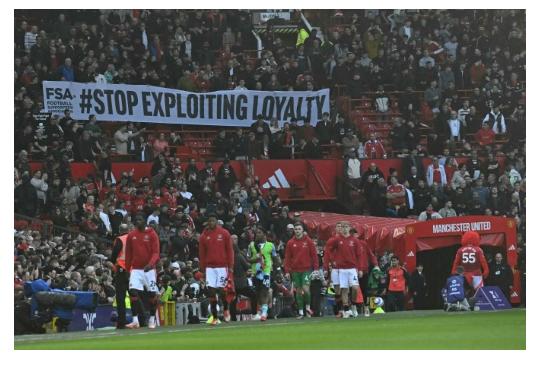
Supporters of United and Liverpool, England’s two most successful clubs, joined forces to back the “Stop Exploiting Loyalty” campaign at a match at Anfield last year.
Despite the unrest, Premier League clubs boasted average attendances of just over 40,000 last season, with stadiums nearly 99 percent full.
However, cracks have appeared in recent months.
Tottenham, struggling at the bottom of the table, have failed to sell out their 63,000-capacity stadium on Champions League nights.
“Too many empty seats and too many supporters, particularly young supporters, priced out of attending. Thin the crowd and you thin the noise,” the Tottenham Supporters’ Trust said in a statement.
But the enduring popularity of football in England during a cost-of-living crisis is testament to its unique place in the national consciousness.
“In a secular society, I think football has become a national religion,” said Maguire.
“Therefore, when I’m making those budgetary decisions — do we go on holiday this year? Are we going out for more meals? Am I going to go out to the pub two nights a week? And am I going to renew my season ticket? Season tickets will take priority.”
The Premier League’s global appeal is built on packed stadiums and electric atmospheres but as the arms race for talent intensifies, fans are feeling the pinch.The Premier League’s global appeal is built on packed stadiums and electric atmospheres but as the arms race for talent intensifies, fans are feeling the pinch. individual opportunity to raise money,” said CEO Niall Couper.
“If the club wants to be there for the long haul, and to be financially sustainable, then actually keeping ticket prices at an affordable level and allowing access to your local community is a safer way to go.”
Supporters, young and old, have also been squeezed by a loss of concessions.
Manchester United are increasing season ticket prices by five percent for the third consecutive year and halving a senior citizens’ discount for some fans.
Supporters of United and Liverpool, England’s two most successful clubs, joined forces to back the “Stop Exploiting Loyalty” campaign at a match at Anfield last year.
Despite the unrest, Premier League clubs boasted average attendances of just over 40,000 last season, with stadiums nearly 99 percent full.
However, cracks have appeared in recent months.
Tottenham, struggling at the bottom of the table, have failed to sell out their 63,000-capacity stadium on Champions League nights.
“Too many empty seats and too many supporters, particularly young supporters, priced out of attending. Thin the crowd and you thin the noise,” the Tottenham Supporters’ Trust said in a statement.
But the enduring popularity of football in England during a cost-of-living crisis is testament to its unique place in the national consciousness.
“In a secular society, I think football has become a national religion,” said Maguire.
“Therefore, when I’m making those budgetary decisions — do we go on holiday this year? Are we going out for more meals? Am I going to go out to the pub two nights a week? And am I going to renew my season ticket? Season tickets will take priority.”
Translate This Article