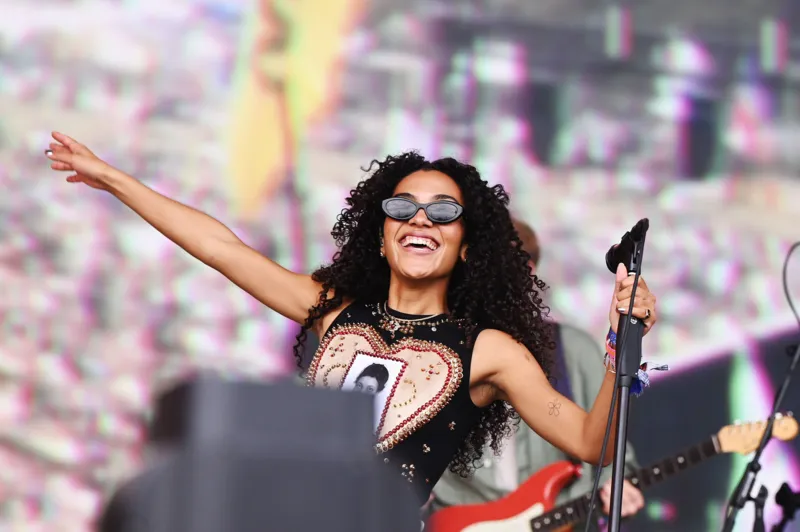
Olivia Dean has described the concert ticketing business as “exploitative” and rife with “inequality” after securing her fans a partial refund from Ticketmaster and AXS.
The star’s comments came after some resale tickets for her North American tour were listed at more than 14 times their original face value, with prices rising above $1,000 (£750).
Last week, the star wrote an open letter to ticketing companies calling the practice “disgusting” and “vile”, and urged the company to “do better”.
On Wednesday, Ticketmaster announced it would cap future resale rates for Dean’s tour and was in the process of “refunding fans for any markup they already paid to resellers on Ticketmaster”.Dean, who has become one of this year’s biggest breakout stars – with four songs charting simultaneously in the UK’s Top 20 – responded to Ticketmaster’s statement by urging the music industry to ensure live music remains “accessible for all”.
Writing on her Instagram page, she said: “The secondary ticket market is an exploitative and unregulated space and we as an industry have a responsibility to protect people and our community.
“Every artist and their team should be granted the option to cap resale at face value ahead of [tickets going] on sale, to keep the live music space accessible for all.
“Thank you for your patience and I’m looking forward to seeing all you real humans at the show.”
BBC Sound Of 2024: How embracing chaos made Olivia Dean a star
Ticketmaster and AXS do give artists the ability to cap ticket resale prices, as Hayley Williams and Chappell Roan have both done recently, but it appears that option did not come into play when Dean’s tour initially went on sale.
In the UK, the government recently confirmed plans to make it illegal for tickets for concerts, theatre, comedy, sport and other live events to be resold for more than their original cost.
The move came after an open letter by some of the biggest names in music, including Coldplay and Dua Lipa, urged the prime minister to cut the “extortionate and pernicious” prices that some fans were being charged.
They said the move would “restore faith in the ticketing system” and “help democratise public access to the arts”.
Translate This Article