Iran’s Supreme Leader Ayatollah Ali Khamenei has reportedly moved into a fortified underground shelter in Tehran after senior military and security officials assessed a heightened risk of a potential US attack, according to two sources close to the government cited by Iran International.The facility is described as a heavily fortified complex with interconnected tunnels, designed to provide maximum protection during wartime contingencies.repeated coughing, dizziness, loss of balance and, in some cases, vomiting or coughing up blood.
Witnesses said the severity and persistence of the symptoms differed from their past experiences with tear gas, although they said they could not identify the substances used.
Gas fired into crowds and escape routes
Witnesses said gas canisters were fired into crowds and along escape routes, including narrow streets and alleys.Videos received from Sabzevar, a city in Razavi Khorasan province in northeastern Iran, and reviewed by Iran International showed security personnel wearing special protective clothing and masks designed for hazardous chemical materials, positioned on military-style vehicles in city streets.
Warning symbols associated with hazardous substances were visible on vehicles in the footage. Sounds consistent with gunfire could be heard in separate videos.
Iranian forces are seen wearing chemical-hazard protective gear on military-style vehicles in the streets of Sabzevar, northeast Iran.
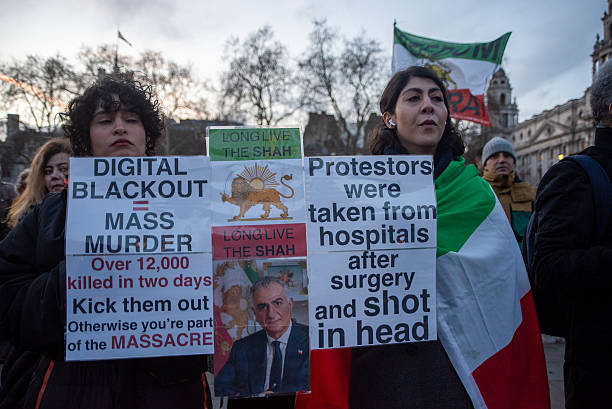
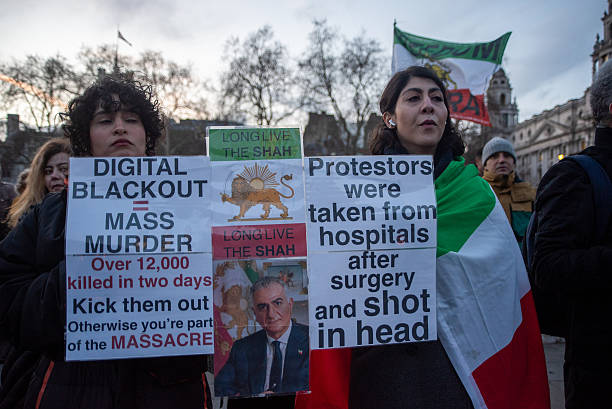
A yellow triangular hazardous-materials warning sign is visible in the footage, while gunfire can be heard in a separate video.internet blackout since January 8 did not only shut down social media but collapsed the country’s last channels to the outside world, isolating families and sharply limiting what evidence of the crackdown could escape.
The shutdown, imposed on January 8 as protests spread nationwide, follows a familiar pattern in the Islamic Republic’s response to unrest. But its scale and duration have once again exposed a critical vulnerability for both Iranians and the outside world: when domestic networks go dark, how does information still get out?
The answer lies in a narrow and increasingly contested ecosystem of satellite-based and offline technologies that operate beyond Iran’s communications infrastructure.
Among the actors working in that space is NetFreedom Pioneers (NFP), a US-based nonprofit that has spent more than a decade developing tools for societies living under digital repression.
Translate This Article