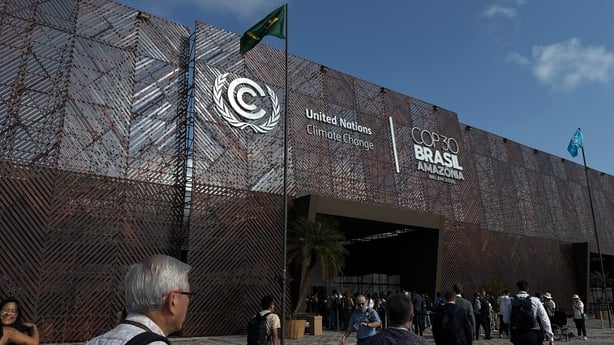
Brazil’s COP30 presidency has pushed through a compromise climate deal that would boost finance for poor nations coping with global warming but that omitted any mention of the fossil fuels driving it.
In securing the accord, Brazil had attempted to demonstrate global unity in addressing climate change impacts even after the world’s biggest historic emitter, the United States, declined to send an official delegation.
But the agreement, which landed in overtime after two weeks of contentious negotiations in the Amazon city of Belem, exposed deep rifts over how future climate action should be pursued.
After gaveling the deal through, COP30 President André Aranha Corrêa do Lago acknowledged the talks had been tough.
“We know some of you had greater ambitions for some of the issues at hand,” he said.
Several countries objected to the summit ending without stronger plans for reining in greenhouse gases or addressing fossil fuels.
Some of the criticism came from Brazil’s neighbors in Latin America, with multiple objections made by Colombia, Panama and Uruguay before Mr Corrêa do Lago suspended the plenary for further consultations.
Noting that fossil fuels were by far the biggest contributor of planet-warming emissions, Colombia’s negotiator said her country could not go along with a deal that ignored science.
“A consensus imposed under climate denialism is a failed agreement,” the Colombian negotiator said.
The three countries said they objected not to COP30’s overall political deal, but to one of the other more technical negotiating texts that countries had been due to approve at the summit’s end, alongside the headline deal.
The three had joined the European Union demanding the deal include language on a transition away from fossil fuels – while a coalition of countries including top oil exporter Saudi Arabia said any fossil fuel mention was off-limits.
After tense overnight negotiations, the EU agreed this morning not to block a final deal, but said it did not agree with the conclusion.
“We should support (the deal) because at least it is going in the right direction,” the European Union’s climate commissioner, Wopke Hoekstra, told reporters before the deal was sealed.
Minister for Climate, Energy and the Environment Darragh O’Brien said Ireland supports the decision by the EU to accept the text.
However, he said it “falls sort of meaningful ambition on the most critical of our time – reducing emissions to mitigate the worst effects of climate change”.
“In particular, it fails to include a credible roadmap for the phase-out of fossil fuels, a step more than 80 countries, including Ireland, called for earlier this week,” said Mr O’Brien.
Translate This Article