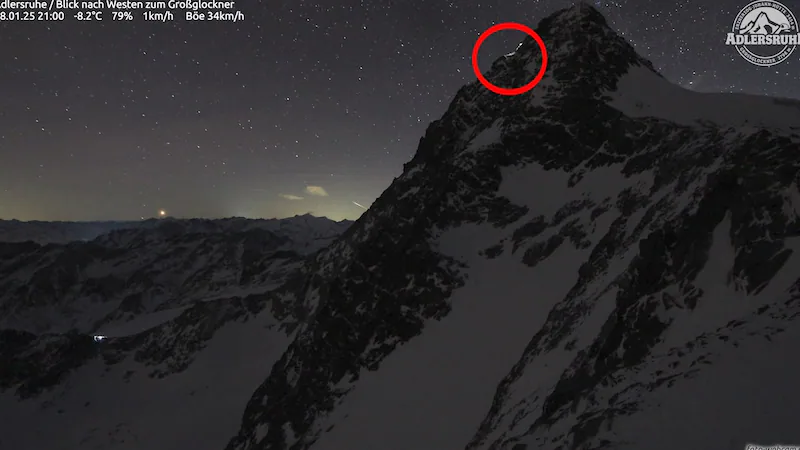
Man accused of leaving his girlfriend to freeze to death on Austria’s tallest mountain went on trial on Thursday in a case that could have major implications for mountain climbers and how liable they are for the safety of companions.
The 36-year-old man, named in local media as Thomas P., is accused of having left his 33-year-old girlfriend, Kerstin G., alone as he went to seek help on Austria’s Grossglockner mountain in the early hours of January 19, 2025 after the pair ran into difficulties while trying to reach the summit.
The trial, at Innsbruck Regional Court, is expected to last just one day, with a possible verdict by Thursday evening, court officials told CNN.
The man is facing a charge of grossly negligent homicide, with state prosecutors in Innsbruck accusing him of making multiple errors, including seeking help too late and not carrying suitable equipment. Prosecutors say he was the “responsible guide for the tour” as, unlike his girlfriend, he was “already very experienced in high-altitude Alpine tours and had planned the tour.”Thomas P. denies wrongdoing and believes his girlfriend’s death was a “tragic accident,” his lawyer, Kurt Jelinek, said.
Jelinek said his client is “deeply saddened by the death of his partner” and described the situation on the mountain, which reaches to 3,798 metres (around 12,460 feet), as “hopeless.”
The couple were climbing the Studlgrat route, which is rated “fairly difficult” on the International Climbing and Mountaineering Federation (UIAA) scale and requires “very good physical shape” and “some rock climbing experience,” according to one tour company.
They set out at 6:45 a.m. and reached the final point of the tour before the summit, called Frühstücksplatzl or “breakfast spot,” at 1:30 p.m. on January 18, 2025, according to the lawyer.However, as weather conditions deteriorated and Kerstin G. reached a point where she could no longer continue the climb, Thomas P. left his girlfriend “unprotected, exhausted, hypothermic,” about 50 metres (164 feet) below the summit at around 2 a.m. on January 19, where she froze to death, prosecutors say.
There are conflicting accounts between the two parties regarding the defendant’s call for help.
Prosecutors say that, despite being “effectively stranded” on the mountain from around 8:50 p.m., Thomas P. failed to notify emergency services until 3:30 a.m. on January 19. He also failed to send any distress signals to a police helicopter that flew overhead at around 10:50 p.m., they say.
Translate This Article