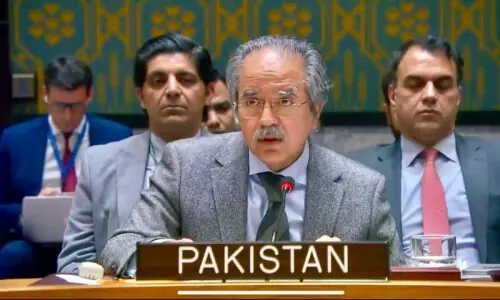
On Wednesday that terrorism emanating from Afghan soil posed the “gravest threat” to the country’s national security and sovereignty.
Pakistan’s Permanent Representative to the United Nations Ambassador Asim Iftikhar Ahmad made the remarks while addressing a debate in New York on the situation in Afghanistan.
In his statement, he highlighted Islamabad’s concerns about security, humanitarian, and socio-economic challenges emerging from neighbouring Afghanistan.
Briefing the UNSC on Pakistan’s counter-terrorism efforts since the Taliban’s takeover of Kabul in 2021, the ambassador said Pakistan had maintained consistent engagement with the Afghan Taliban, conducting high-level visits, facilitating humanitarian relief, supporting the transportation of goods, and announcing trade and transit concessions.
Despite these efforts, he said, threats persisted, creating mounting security challenges for Pakistan and the wider region.
“Afghanistan is once again a safe sanctuary for terrorist groups and proxies, with devastating consequences and mounting security challenges for its immediate neighbours, particularly Pakistan, and the region and beyond.”
He said Afghan authorities were failing to take concrete measures against terrorist groups, adding that Pakistan had witnessed a surge in militant attacks that were planned, financed and orchestrated using Afghan soil under their watch.
“Just this year alone, we have lost close to 1,200 lives to terrorism emanating from Afghanistan. Since 2022, more than 214 Afghan terrorists, including suicide bombers, have been neutralised in Pakistan during counter-terror operations,” he said.
Translate This Article