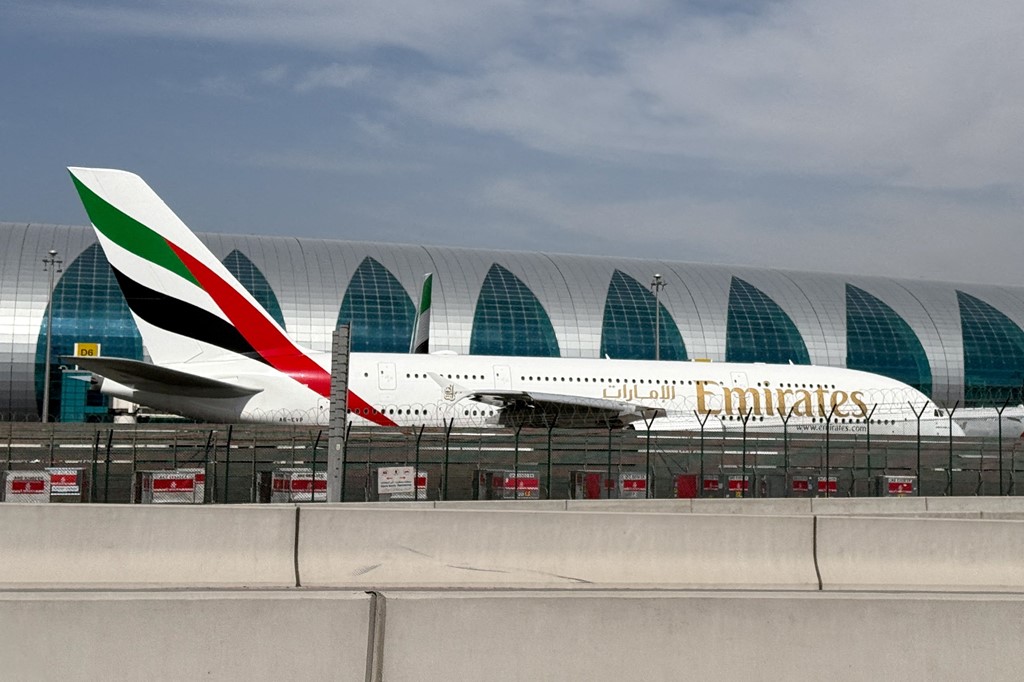
UAE’s aviation authority said air traffic has returned to normal after measures that were introduced on 28 February when the war broke out were lifted.
The airport’s chief executive Paul Griffiths said travel demand through Dubai has remained strong despite disruption from the war.
Dubai International and Al Maktoum International airports have handled more than six million passengers, more than 32,000 aircraft and more than 213,000 metric tonnes of cargo.
In the first quarter of 2026, Dubai International Airport – the world’s busiest international travel hub – handled 18.6m passengers, down from 23.4m a year earlier.Dubai Airports CEO Paul Griffiths said on Monday that with the United Arab Emirates’ airspace now fully clear, operations and flights are being scaled up in line with routing capacity.
Despite disruption from the Iran war since the end of February 28, Dubai International and Al Maktoum International airports have still supported more than 6 million passengers, over 32,000 aircraft movements, and more than 213,000 tonnes of cargo, with demand for travel through Dubai remaining strong, Griffiths added in a LinkedIn post.
He said, “The extraordinary events of the past few weeks are unprecedented for any major airport hub such as DXB. International transfer traffic through the Middle East region accounts for a major share of the global air travel market, with 22.4 million annual passenger journeys flowing through DXB, representing one third of the transfer traffic across the region’s hubs.
DXB is the IATA airport code for Dubai International Airport.
“Maintaining the smooth operation of DXB is therefore critical to keep global journeys moving. Our focus has been on keeping operations safe and consistent for our customers through close coordination and rapid decision-making across the entire airport community and beyond, while ensuring the system remains ready to respond swiftly as conditions improve.”
Translate This Article