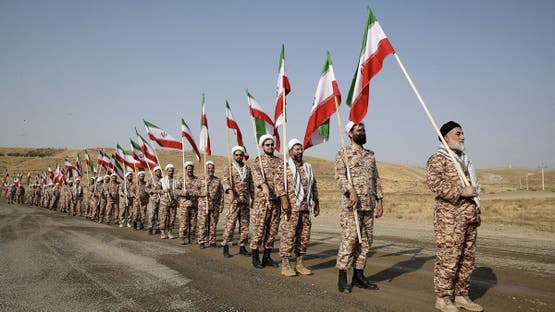
Two months into a war with the US and Israel, Iran no longer has a single, undisputed clerical arbiter at the pinnacle of power — an abrupt break with the past that may be hardening Tehran’s stance as it weighs renewed talks with Washington.
Since its creation in 1979, the Islamic Republic has revolved around a supreme leader with final authority on all key matters of state. But the killing of Ayatollah Ali Khamenei on the first day of the war, and the elevation of his wounded son, Mojtaba, have ushered in a different order dominated by commanders of the Islamic Revolutionary Guard Corps (IRGC) and marked by the absence of a decisive, authoritative referee.Mojtaba Khamenei remains at the apex of the system, but three people familiar with internal deliberations say his role is largely to legitimize decisions made by his generals rather than issue directives himself.
Wartime pressure has concentrated power into a narrower, harder-line inner circle rooted in the Supreme National Security Council (SNSC), the Supreme Leader’s office and the IRGC, which now dominates both military strategy and key political decisions, Iranian officials and analysts say.
“The Iranians are painfully slow in their response,” said a senior Pakistani government official briefed on peace talks between Iran and the United States that Islamabad has been mediating. “There is apparently no one decision-making command structure. At times, it takes them 2 to 3 days to respond.”
Analysts said the obstacle to a deal is not internal infighting in Tehran, but the gap between what Washington is prepared to offer and what Iran’s hardline IRGC was willing to accept.
The diplomatic face of Iran at the talks with the US has been Foreign Minister Abbas Araghchi, more recently joined by parliament speaker Mohammed Baqer Qalibaf — a former IRGC commander, Tehran mayor and presidential candidate — who has emerged during the war as a key conduit between Iran’s political, security and clerical elites.
Iran submitted a new proposal to Washington on Monday, which according to senior Iranian sources envisions staged talks, with the nuclear issue to be set aside at the start until the war ends and disputes over Gulf shipping are resolved. Washington insists the nuclear issue must be addressed from the outset.
“Neither side wants to negotiate,” said Alan Eyre, an Iran expert and former US diplomat, adding that both believed time would weaken the other — Iran through leverage over Hormuz and Washington through economic pressure and a blockade.
For now, neither side can afford to bend, Eyre said: Iran’s IRGC is wary of appearing weak to Washington, while President Donald Trump faces midterm election pressure and little room for flexibility without political cost.
“For either, flexibility would be seen as weakness,” Eyre said.
That caution reflects not just the pressures of the moment, but the way power is now exercised inside Iran.
While Mojtaba is formally Iran’s ultimate authority, he is a figure of assent rather than command, insiders say, endorsing outcomes forged through institutional consensus, rather than imposing authority. Real power, they say, has moved to a unified wartime leadership centered on the SNSC.
Translate This Article