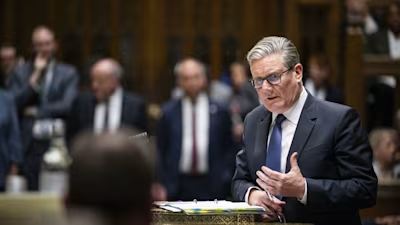
This comes after the Speaker of the House, Sir Lindsay Hoyle, on Monday granted permission for the debate and vote to take place. Both are scheduled for Tuesday.
The vote, pushed by numerous members from across the house as well as the leader of the opposition, has received criticism from some Labour MPs, including Environment Secretary Emma Reynolds, who accused opposition parties of “playing silly political games”.
Dame Emily Thornberry, Labour chairwoman of the Commons Foreign Affairs Committee, told BBC Radio 4’s Today programme on Monday it was “plain as the nose on my face” that the move was timed to cause damage ahead of the May elections.
She did, however, add that an investigation may be required “at some point in the future”.
The prime minister himself has denied he misled the House, and stated his own fury at being kept in the dark by the civil service.
Should the vote be successful, the case will be referred to the Privileges Committee, where Sir Keir Starmer could even be called to give evidence in person.
But what is the Privileges Committee, and what is the case against the PM? What is the Privileges Committee?
The Privileges Committee is a cross-party committee of MPs who have the power to investigate MPs alleged to have breached parliament’s rules and standards.
It has the power to recommend sanctions if it finds rules have been broken, though it would be up to the whole of the Commons to vote on whether these are implemented.
The committee gained significant public attention when it investigated former Prime Minister Boris Johnson over whether he misled parliament about Partygate during the coronavirus pandemic.
In June 2023, the committee published their investigation into Johnson, which found that he had been misleading when he told parliament that Covid lockdown rules had been followed in Downing Street, when they had not.
Johnson resigned as an MP before parliament could vote on it, accusing it of being a “kangaroo court”.
Translate This Article