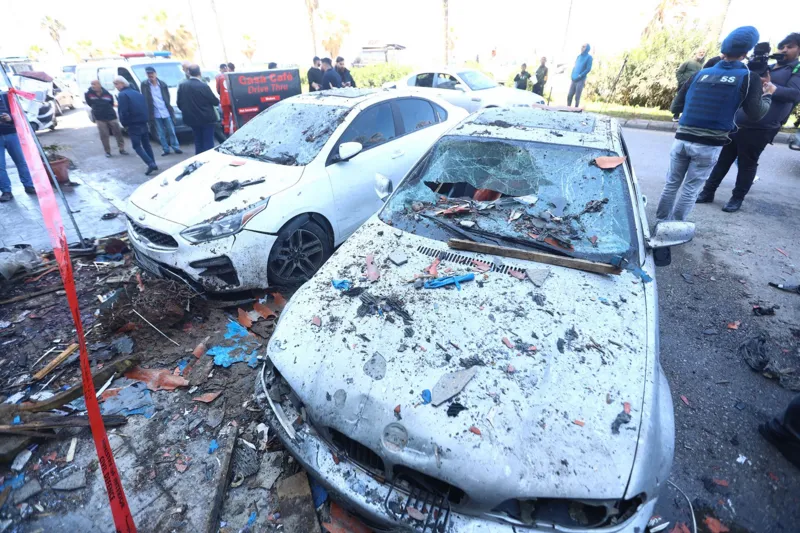
The Israeli military has carried out a large wave of air strikes across Lebanon, with reports of a high number of casualties across the country, hospitals overwhelmed and people believed to be under the rubble of collapsed buildings.Israel described it as the largest wave of air strikes in this conflict, hitting more than 100 of what it called Hezbollah command centres and military sites in 10 minutes.
Attacks hit the southern suburbs of Beirut, southern Lebanon and the eastern Bekaa Valley.
This happened hours after the office of the Israeli Prime Minister, Benjamin Netanyahu, denied the assertion by Pakistan, which helped mediate a ceasefire between the US and Iran, that the deal also covered the devastating conflict here.
Across Lebanon, more than 1,500 people have been killed, including 130 children.More than 1.2 million people have been displaced – one in five of the population – most of them from Shia Muslim communities in the south, the eastern Bekaa Valley and the southern suburbs of Beirut, areas where Hezbollah holds sway.
Villages near the border have been destroyed, as invading Israeli troops aim to create what the Israeli authorities call a security buffer zone, to destroy Hezbollah’s infrastructure and push its fighters away. This has raised concerns that some areas may be occupied even after the end of the war, and that many residents may never be able to return.
After the announcement of a ceasefire in the war between the US and Israel against Iran, which had started in late February, the Lebanese presidency said it would continue “efforts to include Lebanon in regional peace”.
Hezbollah, which has not claimed any attack since the deal was announced, said the group was on the “threshold of a major historic victory” and warned displaced families to wait for a formal ceasefire announcement before trying to return home.
In Lebanon, the latest escalation in the decades-long conflict between Hezbollah and Israel erupted when the group fired rockets into Israel in retaliation for the killing of the Iranian supreme leader, Ayatollah Ali Khamenei, in the opening stages of the war, and in response to near-daily Israeli attacks on Lebanon despite a ceasefire in the country that had been agreed on November 2024.
Israeli officials had indicated their intention to continue with their campaign in Lebanon even if there was a deal with Iran. But in recent days military sources quoted by Israeli media suggested the army had no intention to advance further in their invasion, and acknowledged that they would not be able to disarm Hezbollah by force.
Observers have expressed surprise with Hezbollah’s military capabilities in this conflict, as it was widely believed the group had been severely weakened in their last war. The group has frequently launched rockets and drones into northern Israel but confronted Israeli troops on the ground in southern Lebanon.
In Lebanon, however, Hezbollah has faced strong criticism as many blame it for dragging the country into an unwanted war and of defending the interests of its Iranian patron. But the group still enjoys significant support among Lebanese Shia.
The displacement crisis triggered by the war has put further pressure on the crisis-hit country. Schools that have been turned into shelters are full, and many are sleeping in improvised tents in public spaces and even in cars. The arrival of families to other communities has led to a rise in sectarian tensions, with people fearing that they too could become the target of Israeli attacks.
Translate This Article