Bangladesh goes into votes in landmark national election, referendum
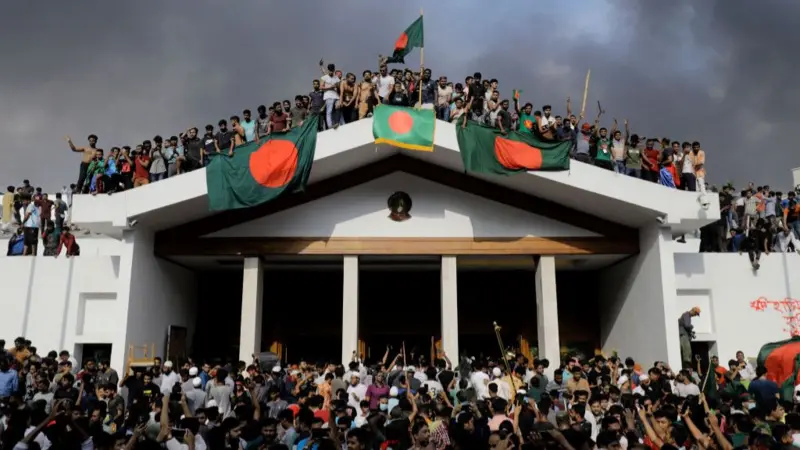
Polling opened at 7:30am and will continue without break until 4:30pm
Voting has started in Bangladesh’s first election since Gen Z mass protests toppled longtime Prime Minister Sheikh Hasina in 2024.
Bangladesh has rolled out its largest-ever security deployment in the country’s electoral history.
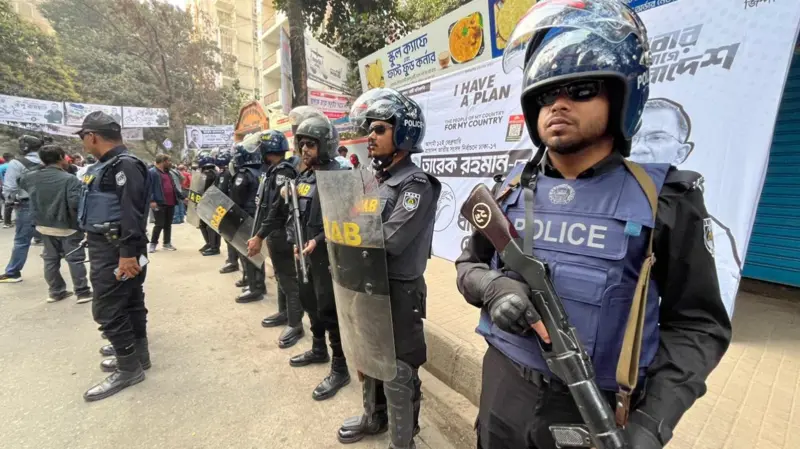
More than 100,000 forces from the army, navy and air force have been deployed for the elections, alongside some 200,000 police.
Bangladesh’s police inspector general said yesterday that 24,000 out of nearly 43,000 polling centers across the country had a “high” or “moderate” risk.
Nearly 90% of the polling centers have CCTV surveillance, while the air force is deploying drones to monitor polling stations.
Live TV
Live
PoliticsBangladesh
Bangladesh election 2026: Polls open in democracy test
Kate Hairsine with AP, Reuters, AFP, dpa
Published 35 minutes agoPublished 35 minutes agolast updated 21 minutes agolast updated 21 minutes ago
Voting has started in Bangladesh’s first election since Gen Z mass protests toppled longtime Prime Minister Sheikh Hasina in 2024. Follow DW for more.
https://p.dw.com/p/58YqN
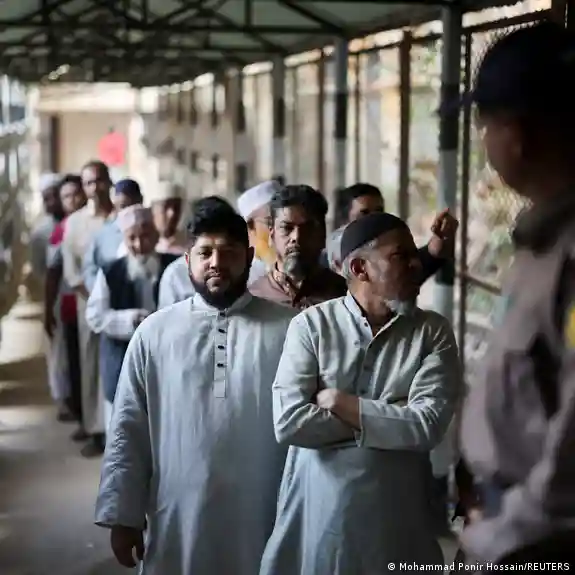
Voters queue in Dhaka
Elections seen as a critical test of democracy after years of political
What you need to know
General election seen as pivotal for Bangladesh’s stability
Frontrunners are the Bangladesh Nationalist Party and Islamist Jamaat-e-Islami
Sheikh Hasina’s Awami League party is banned from contesting the election
More than 127 million people are eligible to vote
Polls opened at 7.30 a.m. (0230 GMT) on Thursday and closes at
4:30 p.m, with results expected by Friday
Voting taking place amid high security
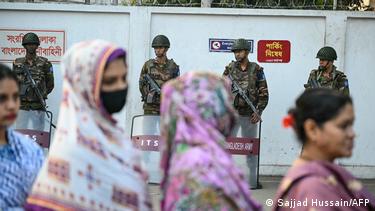
Bangladeshi soldiers stand guard as people line up outside a polling station ahead of the polls in Bangladesh’s general election in Dhaka on February 12, 2026.Bangladeshi soldiers stand guard as people line up outside a polling station ahead of the polls in Bangladesh’s general election in Dhaka on February 12, 2026.
Bangladeshis are voting amdi heavy securityImage: Sajjad Hussain/AFP
Bangladesh has rolled out its largest-ever security deployment in the country’s electoral history.
More than 100,000 forces from the army, navy and air force have been deployed for the elections, alongside some 200,000 police.
Bangladesh’s police inspector general said yesterday that 24,000 out of nearly 43,000 polling centers across the country had a “high” or “moderate” risk.
Nearly 90% of the polling centers have CCTV surveillance, while the air force is deploying drones to monitor polling stations.
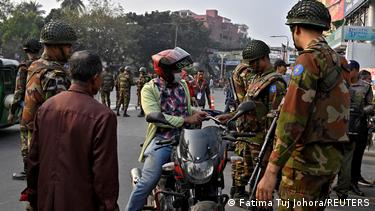
Members of the Bangladesh Army check papers of a motorcyclist at a temporary checkpoint in Dhaka, Bangladesh on February 11, 2026Members of the Bangladesh Army check papers of a motorcyclist at a temporary checkpoint in Dhaka, Bangladesh on February 11, 2026
Forces are ensuring the security of
The Bangladesh Nationalist Party, or BNP, led by Tarique Rahman has emerged as the frontrunner in the polls.
Rahman is the son of former Prime Minister Khaleda Zia.
BNP’s main rival is Jamaat-e-Islami, an Islamist alliance made up of 11 parties.
The Islamic coalition is doing unexpectedly well in opinion polls and appears poised for their strongest electoral showing since the Muslim-majority country’s independence in 1971.
The Awami League of former leader Sheikh Hasina is banned, and she remains in self-imposed exile in long-term ally India.
People are voting for a new government and also taking part in a referendum to change the constitution
An interim government, led by Nobel Peace Price laureate Muhammad Yunus, has led Bangladesh since Hasina fled
In November, a court in Bangladesh sentenced Hasina to death for crimes against humanity over her crackdown -DW
Translate This Article